Gaborone International School

Leading Private Education In Botswana


Start your Application

An English Medium School in Gaborone

At GIS, we believe that every child has the potential to make a lasting and significant impact in the world. That's why we focus on providing our pupils with the skills and knowledge they need to succeed in all areas of their lives.


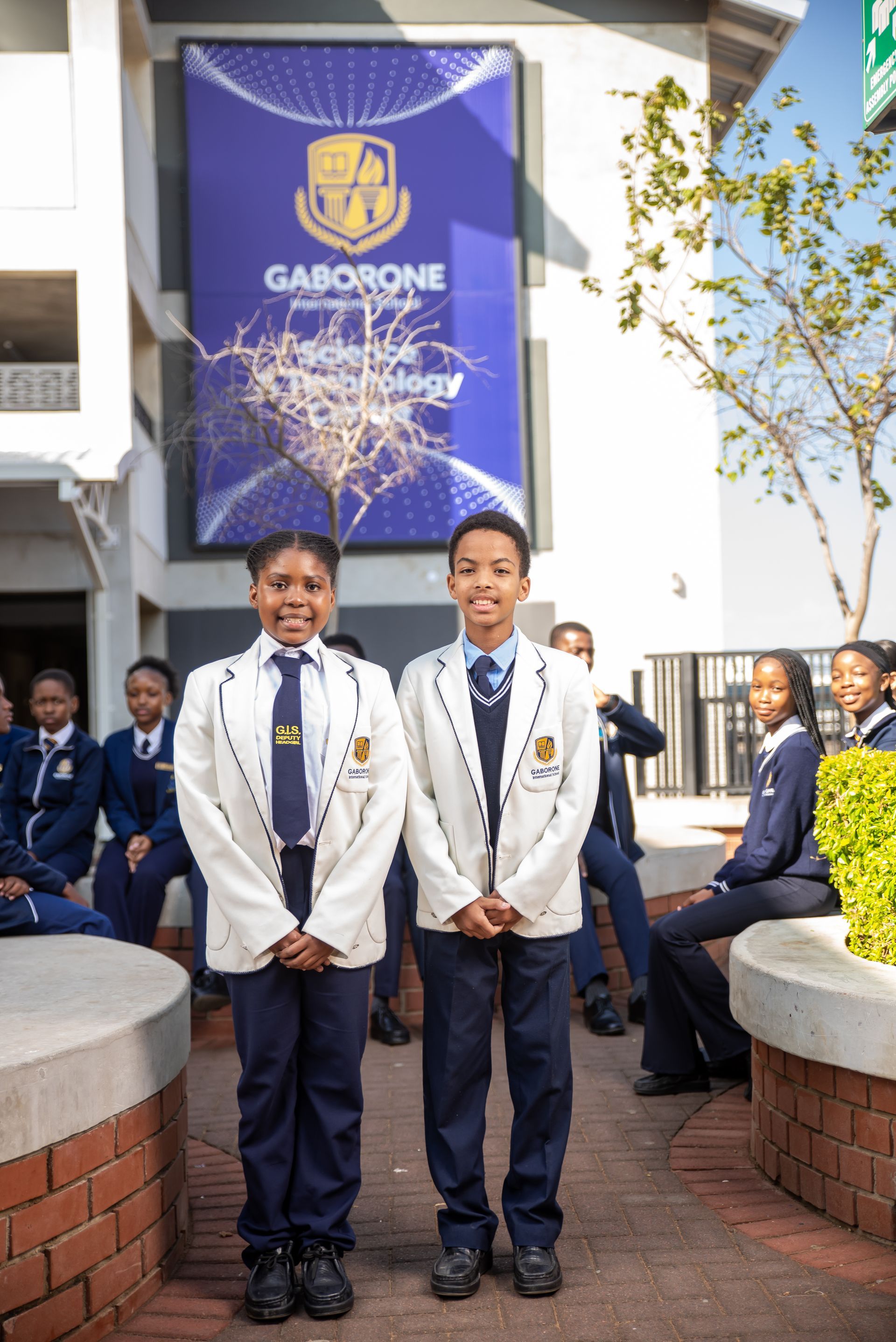
Our spacious campus hosts our pre school, primary school, and high school on the same grounds. This allows us to provide a seamless educational experience for our pupils, from their earliest years to graduation.


If you're looking for an English medium school in Gaborone that will prepare your child for a lasting impact, then GIS is the perfect choice. Contact us today to learn more about our school and how we can help your child reach their full potential.

We have a Preschool free trial

Learn More
A black and white drawing of two crossed pencils and a brush.
Pre School
A black and white drawing of a light bulb on a white background.
Primary School
A black and white drawing of a certificate with a ribbon.
High School

CONTACT DETAILS

Contact: gisinfo@gis.co.bw


Main: +267 316 2230

FRESHDESK SUPPORT

Submit a ticket

Our Blog

April 8, 2026
In a rapidly changing world, education can no longer be defined by textbooks alone. It must inspire, challenge, and ignite a lifelong love of learning. At the heart of this transformation is a simple but powerful belief: every student deserves a place where curiosity is not only welcomed—but deliberately cultivated. In Botswana, this idea is increasingly shaping how leading institutions think about education. Nowhere is this more evident than in the recent evolution of Gaborone International School (GIS), whose rebranding reflects more than a refreshed identity. It signals a deeper commitment to aligning environment, philosophy, and student experience in ways that are both contemporary and grounded while being underpinned by an unwavering commitment to quality education At its core, a school must first be a place where students feel secure, known, supported, and understood. Pastoral care, often understated in conversations about academic success, plays a defining role in this. At GIS, there is a growing emphasis on ensuring that each student is seen not just as a learner, but as an individual navigating both academic and personal development. Structures that support wellbeing, mentorship, and open communication create an atmosphere where students feel safe to take intellectual risks. Curiosity, after all, thrives where there is trust. This sense of care is balanced by a strong culture of discipline, one that is not imposed for its own sake, but cultivated as a framework for growth. Discipline, in this context, is about consistency, accountability, and respect. It teaches students to manage their time, honour commitments, and engage constructively with challenges. Rather than restricting curiosity, it gives it direction, ensuring that exploration is purposeful and sustained. Equally important is the role of tradition and culture in shaping the school environment. Even as GIS embraces innovation and modernisation, it remains anchored in values that promote respect, integrity, and community. A diverse, international student body brings with it a richness of perspectives, and the school’s culture encourages students to both celebrate difference and find common ground. In this balance between global outlook and local relevance, students develop a broader understanding of Botswana, the world and their place within it. The physical environment reinforces these values. Purpose-built science laboratories, collaborative learning spaces, robotics labs, and digital hubs provide students with the tools to explore ideas beyond theory. These spaces are not simply about access to technology, they are about creating opportunities for hands-on, inquiry-driven learning. Supporting this is a philosophy that recognises that each student’s learning journey is unique. The integration of adaptive technologies and responsive teaching methods allows educators to tailor learning experiences, ensuring that students are both challenged and supported. This personalised approach moves beyond standardised expectations, focusing instead on helping each learner reach their full potential. At the center of it all are educators who understand that their role extends beyond instruction. They guide, mentor, and challenge students, encouraging them to think critically, ask better questions, and engage deeply with their learning. Ongoing professional development ensures that teaching remains dynamic, informed by global best practices while rooted in the needs of the local context. What emerges from this alignment of care, culture, discipline, and innovation is an environment that feels both structured and open. Students are given the freedom to explore, within a framework that supports their growth. They learn not only to question the world around them, but to do so with responsibility, empathy, and purpose. The rebranding of Gaborone International School, then, can be understood as a reflection of this balance. It is not about changing direction, but about clarifying intent, about creating a school experience that is as attentive to character as it is to capability. Because when students are supported holistically, when they are cared for, guided by values, and equipped with the right tools, curiosity does more than flourish. It becomes the foundation upon which confident, disciplined, and compassionate individuals are built.
By Principal: Mr Thomas Ramakgoakgoa January 26, 2026
A New Beginning Walking into high school for the first-time marks more than your first day of school; it marks the first step into a community that believes in shaping not only your mind, but your character. As you walked into this hall, you became part of a school that stands firmly on three pillars: Generosity, Integrity, and Self-Discipline . These words are not decorations on a slide; they are the heartbeats of our culture. They describe the kind of person we hope you will become and the kind of student who thrives here. 2. Generosity: The Strength of a Giving Heart Generosity is more than sharing what you have; it is sharing who you are . It shows in the small, everyday actions: offering help when no one asks, listening when a classmate struggles, choosing kindness even when it is not the easiest choice. As your orientation programme highlights, you are entering a community that values being helpful, warm-hearted, considerate, and thoughtful. Generosity builds trust, and trust builds strong teams, friendships, and classrooms. “We rise by lifting others.” 3. Integrity: Doing What Is Right, Even When Unseen Integrity is the quiet voice inside you that says, “Be honest. Be sincere. Be the best version of yourself.” It is the foundation of responsibility, whether that means completing your assignments truthfully, respecting school spaces, or carrying yourself with honour in every interaction. Your presentation reminds you that integrity is about honesty, uprightness, sincerity, and trustworthiness. When integrity guides your choices, people learn they can rely on you, and more importantly, you learn to rely on yourself . “Integrity is choosing courage over comfort.” 4. Self-Discipline: The Driver of Your Success Self-discipline is the ability to manage your thoughts, your behaviour, and your emotions so that you can reach your goals. It is showing determination in your studies, balancing your work and activities, and staying consistent even when distractions feel tempting. In this school, self-discipline is not imposed; it is developed. It grows each time you set goals, follow instructions, respect routines, greet teachers, take care of your environment, and take responsibility for your own learning, just as the orientation sessions will guide you today. “Discipline is the bridge between goals and accomplishment.” 5. What These Three Values Look Like in Daily Life Here at GIS, these values take shape in very practical ways: Generosity shows when you include others, support your classmates, and contribute positively during group work. Integrity shows when you follow the code of conduct, wear your uniform with pride, and uphold the standards introduced to you today. Self-discipline shows when you manage your time, focus during lessons, and commit yourself to excellence, in academics, in sports, and in behaviour. Together, these values do more than make you a good student; they help you become a grounded, confident, and capable young person. 6. Closing: The Journey Ahead As you begin this new chapter, remember that GIS is not only a school, but also a community where you will grow, learn, and discover who you are becoming. The expectations set out today are not barriers; they are pathways. Pathways designed to help you develop character, build resilience, and walk confidently toward your future. Carry generosity in your actions, integrity in your decisions, and self-discipline in your journey. Here at GIS, who you become matters just as much as what you achieve. Welcome to your new beginning.
By Ackisilia Matsveru October 3, 2025
In today’s connected world, young people grow up in a digital society where learning, friendships, and entertainment all happen online. At GIS, we see this not only as a reality to manage, but as an opportunity to empower our learners. Digital citizenship education is about much more than keeping students safe, it is about equipping them to use technology ethically, confidently, and effectively so they can thrive in the digital age. Why Digital Citizenship Matters Every post, click, or share leaves a digital footprint. These footprints can shape a learner’s reputation, relationships, and even their future opportunities. At GIS, students are taught to manage their online presence responsibly and make ethical choices. Through ICT lessons and the use of integrated platforms such as Microsoft Teams, Stasy, MAP, and ADvLEARN , learners don’t just study the theory of online safety, they practise it every day. Each GIS student logs in with personalised accounts, develops strong digital ethics, and is discouraged from behaviours that could lead to cybercrime.
Show More