How School Clubs Foster Personal Growth – The Debate Club

Matshidiso Kokorwe • June 12, 2025

At GIS, learning goes beyond textbooks—it shapes the whole child. Clubs and co-curricular activities play a vital role in developing confident, curious, and capable students. Few are as transformative as the Debate Club, which equips learners with essential life skills while offering a space for personal growth and discovery.


Debate Club gives students powerful exposure to diverse perspectives. Whether working with peers across year groups or engaging with students from other schools, these moments build empathy, adaptability, and communication skills—qualities that serve them long after school.

But debate is about more than arguing opposing views. It’s a rigorous yet supportive environment where students learn to think on their feet, research thoroughly, and communicate with clarity. For many, it begins with hesitation. That’s why our club introduces new members through informal discussions and mock debates. These non-competitive sessions provide a safe space to learn structure, build confidence, and grow at their own pace.


The first real test came at Maru-a-Pula School. Though they didn’t win, the experience was formative. Students learned how to source information properly, evaluate claims critically, and present arguments grounded in logic and evidence. They also strengthened their media literacy—developing the discernment to separate fact from misinformation in today’s digital world.


These habits extend beyond debating. In the classroom and beyond, students become more intentional, articulate, and resilient. They learn to present clearly, listen actively, and stay composed under pressure. This confidence isn’t built overnight—but the Debate Club lays the foundation.

Importantly, they also learned to lose well. Just a week after their initial loss, the team competed again—this time at Westwood International School. The challenge: present a business proposal to a panel of judges. Drawing on everything they had learned, the team walked away with a well-deserved win: Best Speaker in the Business Pitch category, and 1st Place overall. But more valuable than the trophy was what the moment represented—growth, teamwork, and resilience in action.


What Our Debaters Say

“Debate at GIS is about more than just public speaking,” says Nicole Cole, a Form 3 learner. “It helps you become more confident, informed, and ready to lead. Whether you're debating in class or on stage, you learn to think critically, express ideas clearly, and listen respectfully. It’s an experience that stays with you.”


Club captain and Best Speaker winner Neelo Tshimologo, also in Form 3, shares:


“I didn’t start debate with confidence. It built over time—through mistakes, learning, and just showing up. Now, I speak in class without overthinking. I contribute in group work. I work better with people, even adults. Debate taught me to listen properly, not just wait to speak. That’s helped in real life too. Even my writing improved. I now build strong arguments, use evidence correctly, and my teachers have noticed the difference—especially in English and History.


Honestly, debate didn’t just teach me how to argue—it helped me communicate, stay calm, and show up with confidence, even when I felt unsure.”


Thanks to the support of highly qualified staff and the commitment of students, Debate Club continues to grow in numbers and impact. It’s one of many ways GIS enriches learning beyond the classroom—bridging academic content from the Cambridge curriculum with real-world application.

As part of the ADvTECH group, GIS students benefit from world-class opportunities in a multicultural, well-resourced environment. Clubs like Debate reflect our commitment to developing confident, articulate leaders—ready to succeed anywhere.

Students who step into Debate Club may start unsure—but they leave empowered.
By Darren April 28, 2026
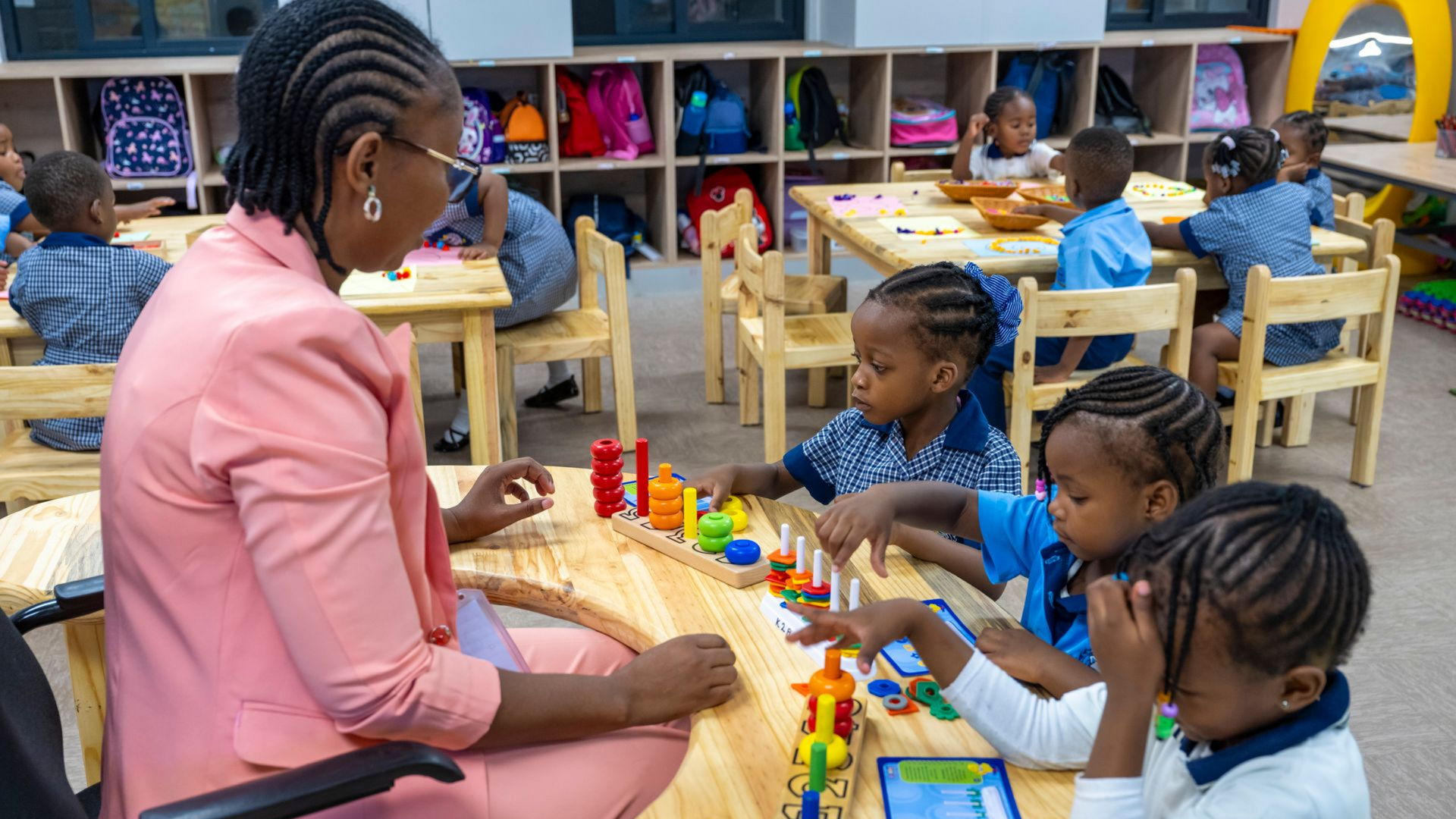
Why parents must approach education as a long-term investment – Advtech Choosing a school for your child will be one of the most complex and consequential decisions parents will ever make. When parents choose a school for their child, the decision is often shaped by immediate needs: convenience, reputation, or results in the senior years. Yet schooling is not a short-term decision. It is one of the longest and most formative investments a family will ever make, stretching over 12 to 15 years or more, from early childhood development through to Form 4 and further study. Darren Purdon, Head of Advtech Schools Academics, says the real value of education lies not in isolated moments of achievement, but in the intentional construction of learning over time, and that parents should approach their child’s educational journey intentionally, from start to finish. “Education depends on interconnected building blocks, each phase deliberately designed to prepare learners for the next,” he says. Parents should therefore carefully consider the elements that underpin a successful, lifelong educational journey before making this important decision. FOUNDATIONS MATTER Learning does not begin in Standard 1. It starts far earlier, in Kindergarten, where children develop the cognitive, social, emotional, and language skills that will underpin their entire academic journey, Purdon says. “When these early years are thoughtfully planned, children are more likely to arrive in the Foundation Phase confident, curious, and ready to learn. When they are not, gaps emerge that can widen over time. If the foundations are secure, progress accelerates, as we see in our Advtech Schools where we utilise international best practices and benchmarks to personalise early learning.” THE IMPORTANCE OF BELONGING Academic success is deeply connected to emotional safety and a sense of belonging. Children learn best when they feel comfortable at school, when they feel seen, supported and happy. And when teachers are supported, engaged, and professionally fulfilled, that sense of wellbeing naturally filters into the classroom. When students are excited about going to school, engagement increases, persistence improves and learning deepens. Social and emotional learning and supportive classroom environments with caring teachers underpin deep learning. Advtech schools include experienced psycho-social specialists to continually ensure teachers are upskilled in managing diverse classrooms. RESPONSIVE TEACHING AND TECH Effective education is not defined by what has been taught, but by what has been learned. “At Advtech schools, there is a growing shift toward instructional models that prioritise responsiveness. If learners have not grasped a concept, the expectation is not to move on regardless, but to re-teach using different strategies until understanding is achieved,” Purdon says. Additionally, technology has become a powerful enabler of this responsiveness, but not as a replacement for teachers. “AI-assisted tools, and classroom digital platforms such as Advlearn, increasingly act as classroom assistants, helping teachers identify learning gaps quickly and accurately. These tools provide insight into where students are struggling, allowing teachers to personalise support and adjust instruction accordingly.” INTENTIONAL SUBJECT PATHWAYS Consistency and coherence across subjects are another critical component of long-term value creation in education. “Take Mathematics as an example. Mathematical competence is not built in isolated units or single phases, it requires a carefully sequenced programme that develops conceptual understanding, fluency and confidence year after year,” says Purdon. “An intentional approach ensures that each phase prepares students for what follows, creating a golden thread that runs from early numeracy through to advanced problem-solving in the senior years. Gaps are far harder to close when this thread is broken.” The same principle applies across subjects: literacy, science, languages, and beyond. “Strategic curriculum alignment therefore ensures that learning compounds rather than resets each year, and parents should keep this in mind when strategizing their child’s educational journey.” CHOOSING A SCHOOL WITH THE LONG VIEW For parents, the key question should not only be “Is this a good school now?”, but rather “Is this a school that understands the full journey, as well as understands where my child excels and needs support in each subject?” “Advtech Schools value long-term academic growth, student wellbeing, teacher development, and intentional curriculum design offers far more than short-term results. It offers continuity, stability, and a clear vision of success from the earliest years through to matric,  ” Purdon says. “And in an education landscape that continues to evolve, the most trusted institutions are those that recognise schooling not as a series of isolated years, but as a curated journey, using regular academic data to personalise learning and shape student success for life.”
April 8, 2026
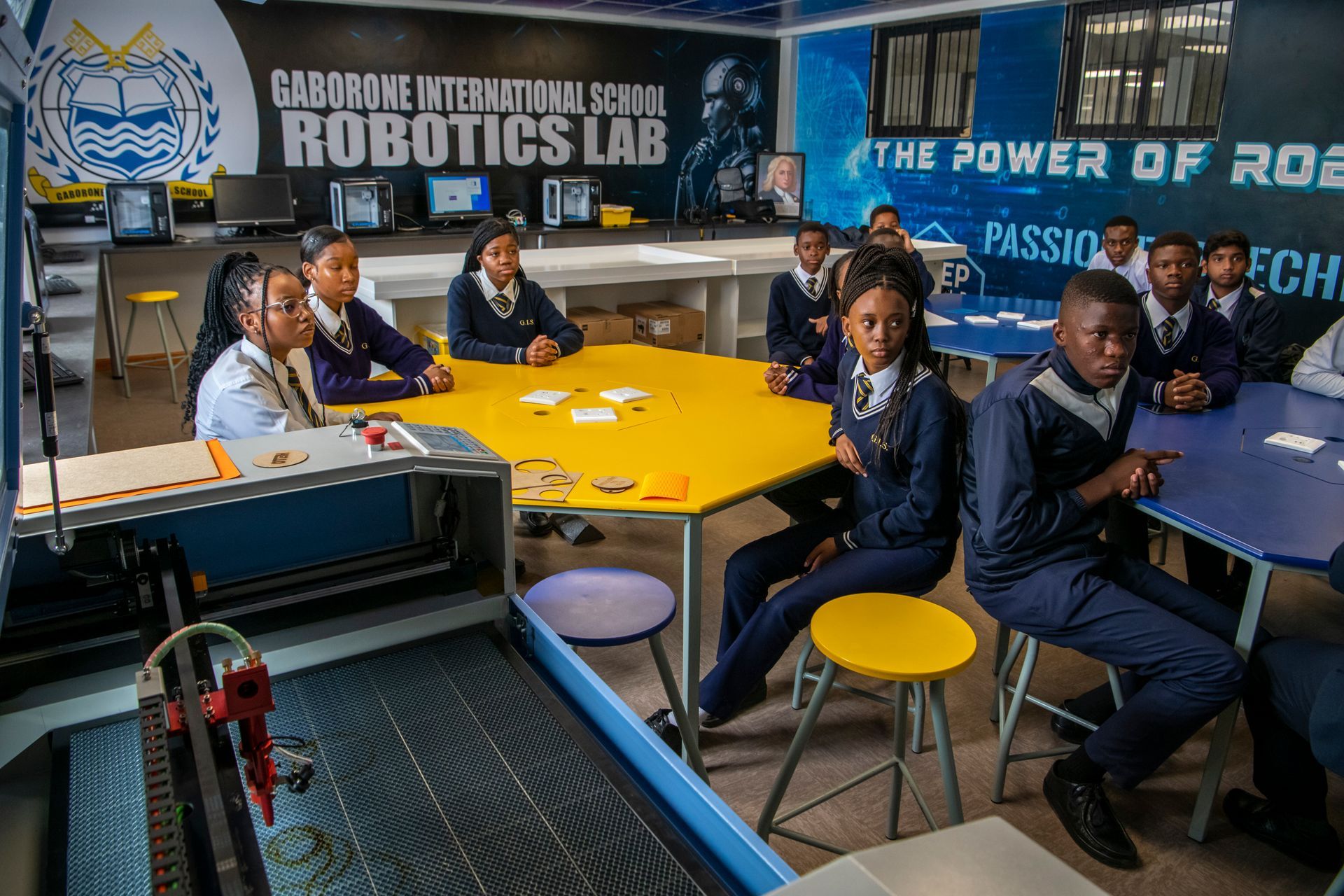
In a rapidly changing world, education can no longer be defined by textbooks alone. It must inspire, challenge, and ignite a lifelong love of learning. At the heart of this transformation is a simple but powerful belief: every student deserves a place where curiosity is not only welcomed—but deliberately cultivated. In Botswana, this idea is increasingly shaping how leading institutions think about education. Nowhere is this more evident than in the recent evolution of Gaborone International School (GIS), whose rebranding reflects more than a refreshed identity. It signals a deeper commitment to aligning environment, philosophy, and student experience in ways that are both contemporary and grounded while being underpinned by an unwavering commitment to quality education At its core, a school must first be a place where students feel secure, known, supported, and understood. Pastoral care, often understated in conversations about academic success, plays a defining role in this. At GIS, there is a growing emphasis on ensuring that each student is seen not just as a learner, but as an individual navigating both academic and personal development. Structures that support wellbeing, mentorship, and open communication create an atmosphere where students feel safe to take intellectual risks. Curiosity, after all, thrives where there is trust. This sense of care is balanced by a strong culture of discipline, one that is not imposed for its own sake, but cultivated as a framework for growth. Discipline, in this context, is about consistency, accountability, and respect. It teaches students to manage their time, honour commitments, and engage constructively with challenges. Rather than restricting curiosity, it gives it direction, ensuring that exploration is purposeful and sustained. Equally important is the role of tradition and culture in shaping the school environment. Even as GIS embraces innovation and modernisation, it remains anchored in values that promote respect, integrity, and community. A diverse, international student body brings with it a richness of perspectives, and the school’s culture encourages students to both celebrate difference and find common ground. In this balance between global outlook and local relevance, students develop a broader understanding of Botswana, the world and their place within it. The physical environment reinforces these values. Purpose-built science laboratories, collaborative learning spaces, robotics labs, and digital hubs provide students with the tools to explore ideas beyond theory. These spaces are not simply about access to technology, they are about creating opportunities for hands-on, inquiry-driven learning. Supporting this is a philosophy that recognises that each student’s learning journey is unique. The integration of adaptive technologies and responsive teaching methods allows educators to tailor learning experiences, ensuring that students are both challenged and supported. This personalised approach moves beyond standardised expectations, focusing instead on helping each learner reach their full potential. At the center of it all are educators who understand that their role extends beyond instruction. They guide, mentor, and challenge students, encouraging them to think critically, ask better questions, and engage deeply with their learning. Ongoing professional development ensures that teaching remains dynamic, informed by global best practices while rooted in the needs of the local context. What emerges from this alignment of care, culture, discipline, and innovation is an environment that feels both structured and open. Students are given the freedom to explore, within a framework that supports their growth. They learn not only to question the world around them, but to do so with responsibility, empathy, and purpose. The rebranding of Gaborone International School, then, can be understood as a reflection of this balance. It is not about changing direction, but about clarifying intent, about creating a school experience that is as attentive to character as it is to capability. Because when students are supported holistically, when they are cared for, guided by values, and equipped with the right tools, curiosity does more than flourish. It becomes the foundation upon which confident, disciplined, and compassionate individuals are built.
By Principal: Mr Thomas Ramakgoakgoa January 26, 2026
A New Beginning Walking into high school for the first-time marks more than your first day of school; it marks the first step into a community that believes in shaping not only your mind, but your character. As you walked into this hall, you became part of a school that stands firmly on three pillars: Generosity, Integrity, and Self-Discipline . These words are not decorations on a slide; they are the heartbeats of our culture. They describe the kind of person we hope you will become and the kind of student who thrives here. 2. Generosity: The Strength of a Giving Heart Generosity is more than sharing what you have; it is sharing who you are . It shows in the small, everyday actions: offering help when no one asks, listening when a classmate struggles, choosing kindness even when it is not the easiest choice. As your orientation programme highlights, you are entering a community that values being helpful, warm-hearted, considerate, and thoughtful. Generosity builds trust, and trust builds strong teams, friendships, and classrooms. “We rise by lifting others.” 3. Integrity: Doing What Is Right, Even When Unseen Integrity is the quiet voice inside you that says, “Be honest. Be sincere. Be the best version of yourself.” It is the foundation of responsibility, whether that means completing your assignments truthfully, respecting school spaces, or carrying yourself with honour in every interaction. Your presentation reminds you that integrity is about honesty, uprightness, sincerity, and trustworthiness. When integrity guides your choices, people learn they can rely on you, and more importantly, you learn to rely on yourself . “Integrity is choosing courage over comfort.” 4. Self-Discipline: The Driver of Your Success Self-discipline is the ability to manage your thoughts, your behaviour, and your emotions so that you can reach your goals. It is showing determination in your studies, balancing your work and activities, and staying consistent even when distractions feel tempting. In this school, self-discipline is not imposed; it is developed. It grows each time you set goals, follow instructions, respect routines, greet teachers, take care of your environment, and take responsibility for your own learning, just as the orientation sessions will guide you today. “Discipline is the bridge between goals and accomplishment.” 5. What These Three Values Look Like in Daily Life Here at GIS, these values take shape in very practical ways: Generosity shows when you include others, support your classmates, and contribute positively during group work. Integrity shows when you follow the code of conduct, wear your uniform with pride, and uphold the standards introduced to you today. Self-discipline shows when you manage your time, focus during lessons, and commit yourself to excellence, in academics, in sports, and in behaviour. Together, these values do more than make you a good student; they help you become a grounded, confident, and capable young person. 6. Closing: The Journey Ahead As you begin this new chapter, remember that GIS is not only a school, but also a community where you will grow, learn, and discover who you are becoming. The expectations set out today are not barriers; they are pathways. Pathways designed to help you develop character, build resilience, and walk confidently toward your future. Carry generosity in your actions, integrity in your decisions, and self-discipline in your journey. Here at GIS, who you become matters just as much as what you achieve. Welcome to your new beginning.