Education That Shapes Character, Purpose and Potential

May 21, 2026

Education That Shapes Character, Purpose and Potential

In today’s rapidly changing world, education carries a responsibility far greater than academic achievement alone. Schools are not only preparing students for examinations or university – they are shaping young people who will one day lead, serve, and contribute meaningfully to society.

At Gaborone International School, this responsibility is taken seriously. The school believes education should develop learners who are academically capable, ethically grounded, emotionally resilient, and prepared for life beyond the classroom.


This philosophy is guided by the school’s core values of Integrity, Growth, Excellence, and Generosity of Spirit. These values are not simply spoken about, they are embedded into daily school life, shaping the way students learn, interact, and grow. “Discipline is not only about rules,” says the newly appointed Deputy Head of Discipline, Kagiso Mfa. “It is about helping young people develop accountability, self-respect, and the ability to make good decisions independently. At GIS, we want students to understand that character matters just as much as achievement.” In an environment where young people face increasing social pressures and constant digital influence, schools play an important role in helping students build resilience, responsibility, and strong values.


Executive Head of GIS, Hannelie Raubenheimer, believes schools have a significant responsibility in shaping future citizens. “Parents entrust schools with helping shape the kind of people their children will become,” she says. “Academic success remains important, but true education must also develop integrity, compassion, resilience, and responsibility. We want our students to leave GIS with both confidence and strong character.”

At GIS, learning extends far beyond academics. Through sport, leadership opportunities, service initiatives, and community involvement, students are encouraged to live out the school’s values in practical and meaningful ways.


Integrity encourages honesty and responsibility, accountability, and self-respect. Growth inspires students to embrace challenges with resilience and perseverance. Excellence drives students to pursue their best in every area of school life. Generosity of Spirit reminds learners of the importance of kindness, compassion, and empathy - contributing positively to others. As Botswana continues to grow within an increasingly connected world, GIS remains committed to developing young people who are not only successful academically but who will also lead with purpose, responsibility, and humanity.
August 11, 2026
My child is shy to ask for anything, and I realised that the teacher at his previous school was not welcoming or friendly to the children.
August 3, 2026
Why Consistency Between Home and School Matters Most
July 21, 2026
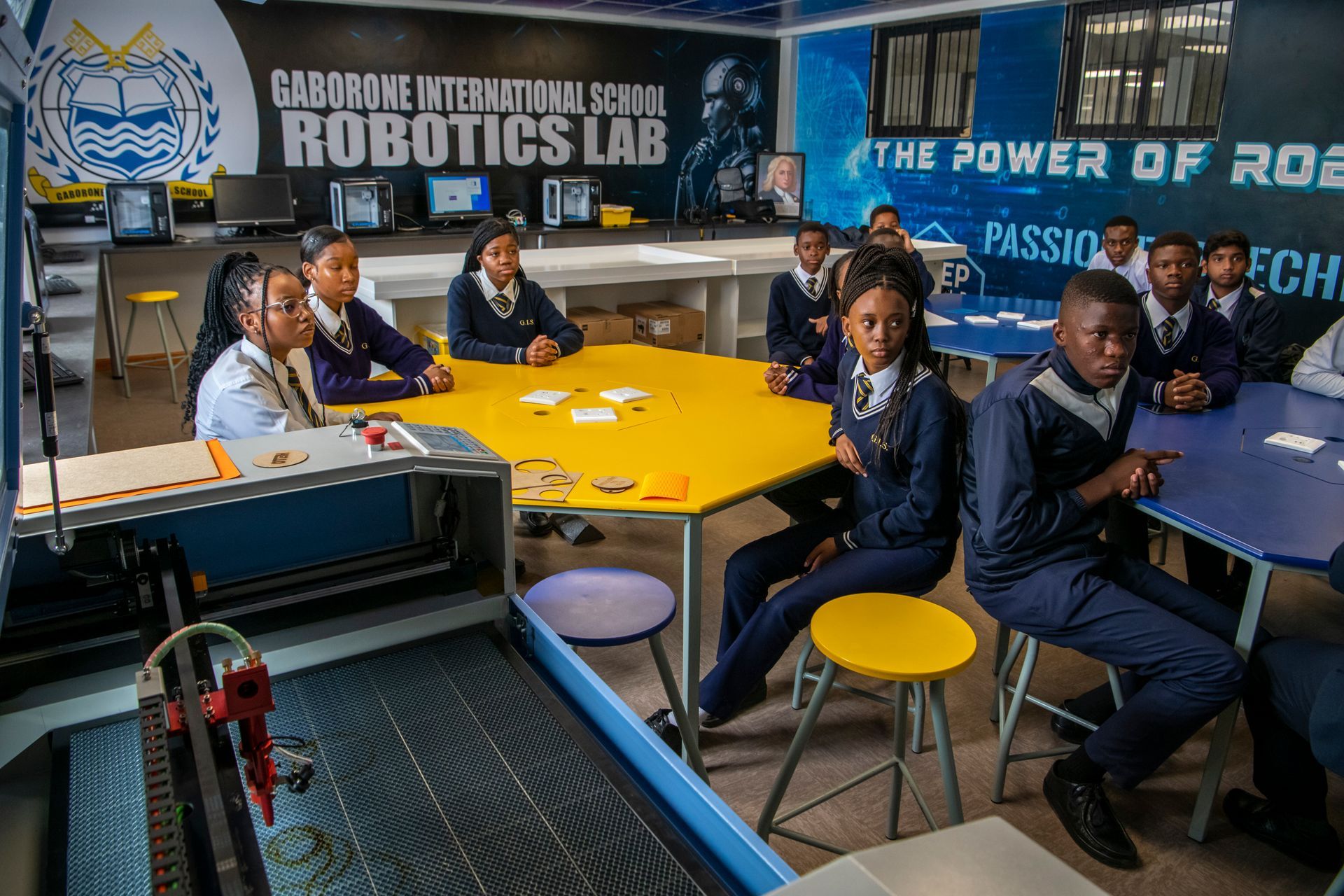
Every Student learns differently! Think about it like this; In the real world, we customize our coffee orders, hairstyles, our music playlists, and occasionally take our own clothes to the tailor to get a perfect fit in line with our our tastes. All this is done to provide the best customer service as well as for the customer to cherish it. So, why should our children’s educational journeys be treated differently? From time immemorial until now, the education system has evolved drastically from the former traditional teaching where the teacher was ‘ Mr. I know it All , where learners were just like passive passengers on an intellectual train to the current modern approach known as Personalized Learning. When put together, Personalized Learning’ means teachers provide targeted learning towards each student’s unique learning needs, interests, learning styles and modify their experiences. Personalized Learning ensures every lesson is resourceful, relevant and engaging with all students, which helps them grasp concepts taught more effectively leaving them with a touch of confidence in themselves. How Do Personalized Learning Approaches Support Different Learning Styles and Learner Progress? As educators at Gaborone International School, we understand that learning how our learners process information is not just beneficial to them, but it is a crucial part of our work to become excellent at our jobs and in ensuring every student succeeds in their academic journey. At GIS, we adopt these fou r famous and common learning styles for our learners: 1. Visual Learners These are learners who understand and remember things best when they see them. Thus, as teachers at GIS, we make use of PowerPoint Presentations, use information in diagrammatic form, images/pictures and videos while teaching our students. Our growing innovative techniques with digital equipment; for example, making use of projectors and iPads with learners has proven very helpful to these specific learners. 2. Auditory Learners : These learn best by hearing information and they remember spoken words. For these students, we make use of assigning group tasks to certain subtopics in a topic/question and once a set time is over, we push for students to teach it /explain it to the whole class (peer teaching). Additionally, rather than the teacher delivering all the information, learners are given a chance to collaborate with each other, and this makes them retain concepts taught easily. 3. Kinesthetic Learners: These learners enjoy hands-on activities, they learn quicker by doing & moving or changing seating positions. DIY Ferris Wheels by Std 3 Learners during a Robotics lesson As teachers, we try to make this possible as they engage in different specialist subjects. For example, However, we can make these learners get involved as we take them to the labs, Music, Art, PE and making use of buildings blocks/models. This way, learners can 10 channel their energy productively without disrupting their concentration span. 4. Reading /Writing Learners: These are learners who understand better when they read and write things down. This one is a classic traditional style where students write notes during class, read out loud what is on the board, and they love reading articles. In the Lower Primary school, particularly Standard 1 to 3, our Guided Readers program takes care of such learners.  By adding all these techniques to how we teach learners, it has helped us to answer a lot of questions our parents had and remove anxieties as they drop off their children at school each day. This makes them confident that their children are treated as individuals with unique talents and goals and are given room to thrive in a system that values them more and allows self-advocacy and the best to come out of them.